img_5181

Should I take a cruise or stay at an All-inclusive Resort?

Someone recently asked me: Which do I prefer—a cruise or an all-inclusive resort?

That’s actually a good question. Here is an intellectual, unbiased perspective.

I’ve done almost 100 cruises across numerous cruise lines and ships, and I’ve also stayed at many all-inclusive resorts around the world—from the Caribbean to the Maldives. I genuinely enjoy both experiences.

But if I’m evaluating them strictly on overall value, variety, entertainment, and experience, I give the edge to cruising.

Now, there is no one-size-fits-all answer. Vacation preferences are highly subjective. Some people want to arrive at one beautiful location, unpack once, sit on the beach, and spend a week completely immersed in that destination. There is absolutely nothing wrong with that.

But here’s where cruising becomes difficult to beat.

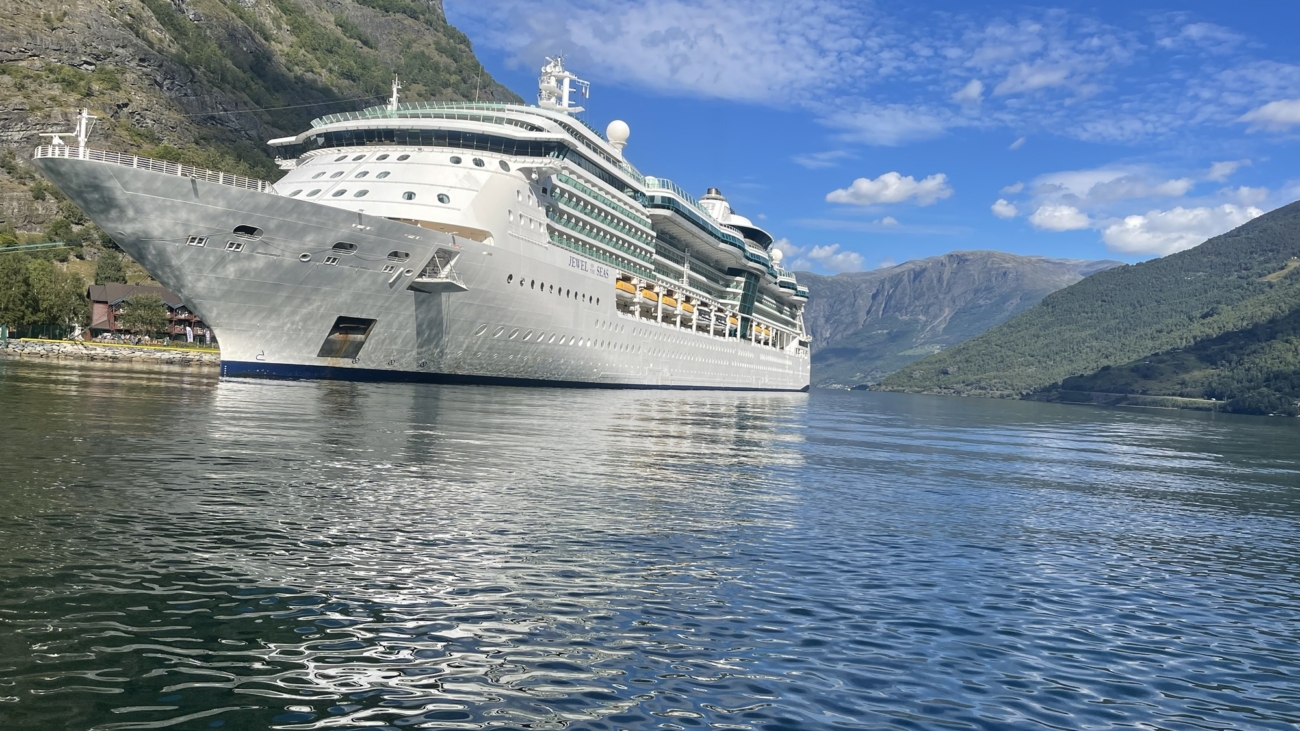
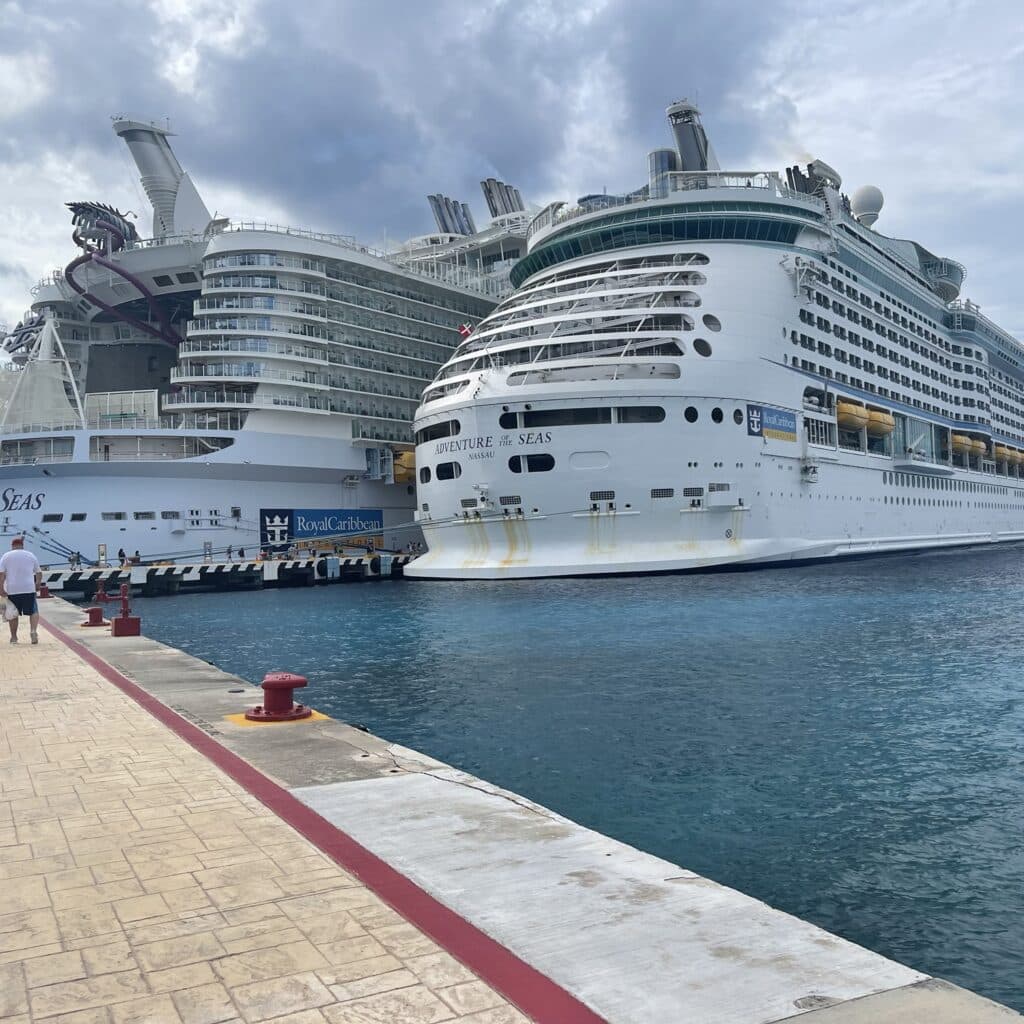
Take a ship like Royal Caribbean’s Oasis of the Seas. Instead of thinking of it simply as a ship, think of it as a small floating city.

You have Central Park, restaurants ranging from Italian and Japanese cuisine to steakhouses, shops, a casino, nightclubs, Latin dancing at Boleros, live music, bars, pools, a gym, spa, entertainment venues, and countless activities—all contained within one moving destination.

And that brings me to perhaps the biggest advantage: entertainment.

A quality all-inclusive resort may have nightly entertainment, live music, activities, and local performers. Some resorts do this extremely well.

But the major cruise lines operate on an entirely different entertainment scale.

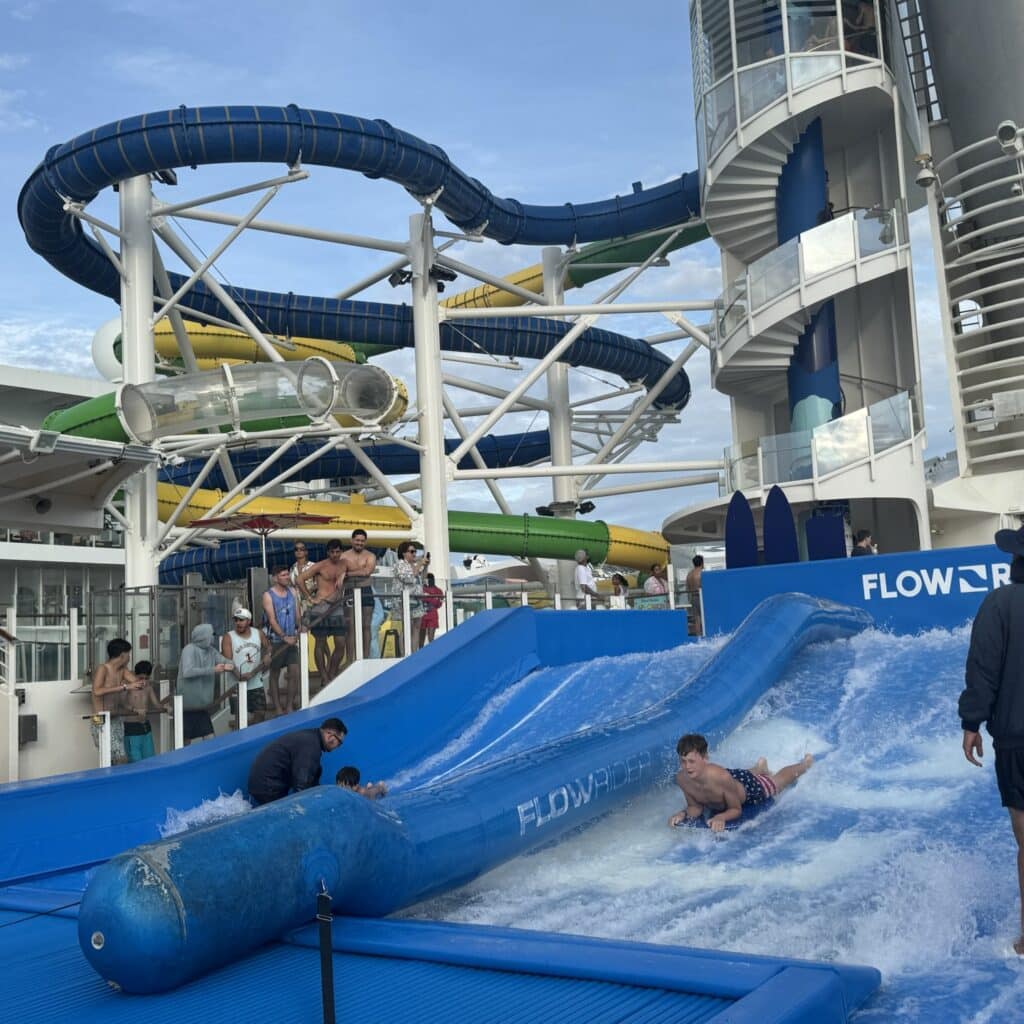
Modern ships can offer Broadway-style productions, aquatic shows, ice-skating performances, comedy clubs, live bands, orchestras, karaoke, dance venues, specialty performers, and musicians recruited internationally.
That distinction matters.

A resort is generally drawing its entertainment resources from one property and often one geographic region. A major cruise line can recruit performers and production teams from around the world and invest in entertainment across an entire fleet. The scale and economics are simply different.

Then there is variety.

At a resort, the resort is essentially the destination.

On a cruise, the ship is part of the destination—and tomorrow morning there may be another country outside your window.

That’s a significant difference.

Critics correctly point out that cruising sometimes provides limited time in each port. That’s true. If your objective is deep cultural immersion in one destination, spending several days or weeks there is obviously superior to spending eight hours in port.

But two opposing ideas can be true simultaneously.

Many cruises now have overnight port calls. There are also repositioning, transatlantic, and transpacific cruises that function almost like transportation between continents. I do this often, the ship is my Uber 😁. You can combine the cruise with extended stays before or after the sailing.
And considering that more than 70% of Earth’s surface is covered by water, traveling by sea offers a completely different perspective of the planet.

There is also an important distinction people sometimes overlook: not all cruises are comparable.

Comparing a small, older cruise ship to one of today’s newest mega-ships is almost like comparing two different vacation categories. Larger modern ships have evolved into sophisticated resorts at sea, with neighborhoods, parks, entertainment districts, specialty dining, sports facilities, and attractions that would have been unimaginable on cruise ships a generation ago.

Likewise, all-inclusive resorts are not created equally. A luxury property in the Maldives is obviously a very different experience from a budget all-inclusive elsewhere.

So my conclusion isn’t that cruises are universally “better” than resorts. They aren’t.

The better vacation depends on what you value.

If your priority is relaxation, privacy, a great beach, and deeply experiencing one destination, the all-inclusive resort may win.

But if your priorities are variety, entertainment, dining choices, activities, multiple destinations, and the amount of experience bundled into one vacation, I believe a good modern cruise provides the stronger overall value.

That’s why, after experiencing plenty of both, I give cruising the nod.

An all-inclusive resort gives you a destination.

A great cruise gives you a resort, transportation, entertainment, and multiple destinations—all while your hotel travels with you.

For me, that’s a difficult value proposition to beat. 🚢🌎.
55d5a191-ec53-424f-81ed-3926bf7ade44

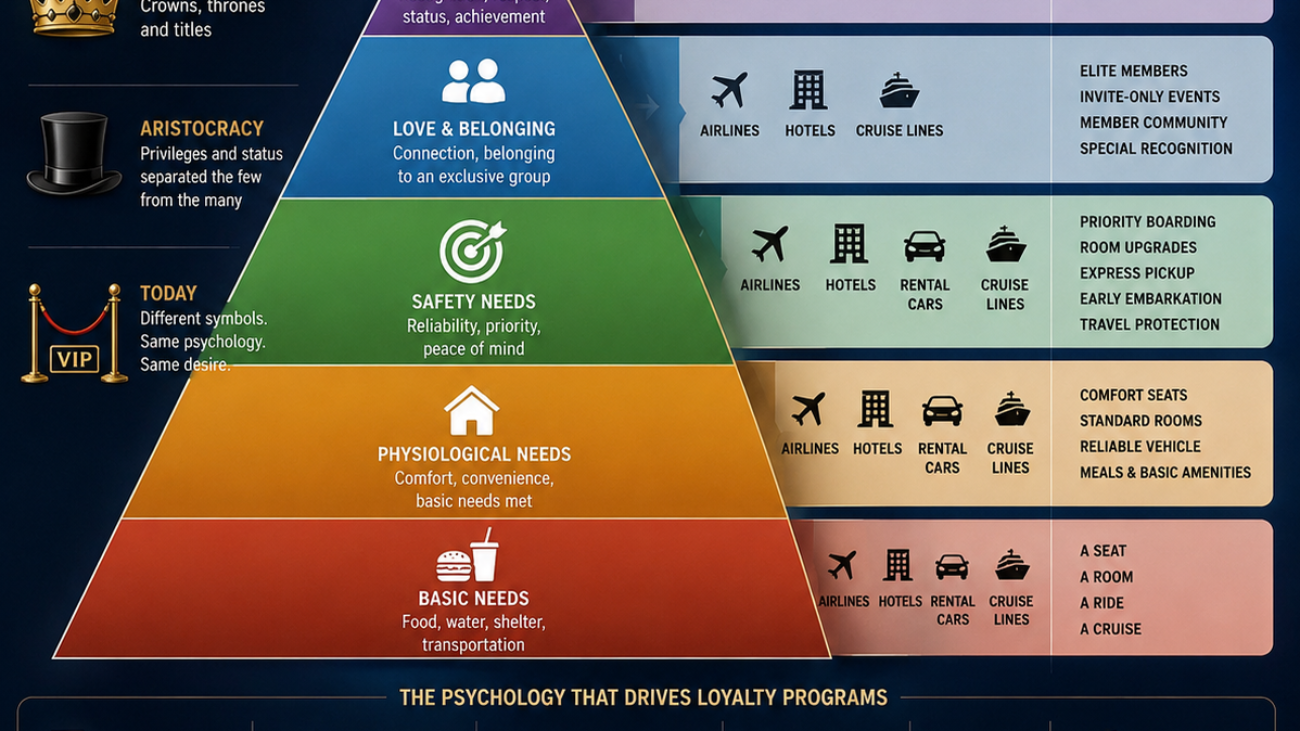
THE PSYCHOLOGY OF STATUS: WHY WE LOVE FEELING “IMPORTANT”

As humans, we all crave some degree of recognition, achievement, and importance. It’s not new—it has existed throughout human history.

Kings and queens sat on thrones. Aristocrats held titles separating them from commoners. Societies created social classes and symbols of rank. Today, the symbols have changed, but the psychology really hasn’t.

Remember Maslow’s Hierarchy of Needs (Psychology 101)? Maslow identified esteem—recognition, achievement, respect, and status—as a fundamental human motivation.

We pay for First Class on airplanes and premium seats on trains. Clubs sell VIP tables behind velvet ropes. Hotels give us Diamond status. Airlines call us Platinum or Executive. Rental-car companies create elite tiers. Cruise lines give us priority boarding and special recognition.

“Get our credit card, spend $3,000 in three months and you will earn (insert status here🤔), a free checked bag, and priority boarding. Sounds familiar 🤔

Different industries. Same human psychology.

Sometimes we aren’t simply buying a better product—we’re buying the feeling of being more important, recognized, or exclusive than everyone else.

Once we achieve that status, we don’t want to give it up. So we spend more, travel more, and sometimes remain loyal even when another company offers better value.

Carnival’s new loyalty system is a fascinating example. By shifting greater emphasis from days cruised to dollars spent, Carnival is connecting the psychological pursuit of status more directly to revenue.

And from a business perspective, that is brilliant.

Again, as humans, we do enjoy these “VIP benefits.” But understanding the psychology keeps everything in perspective.

Kings had crowns. Clubs have velvet ropes. Airlines have First Class. Cruise lines have Silver, Gold Platinum, Diamond, Pinnacle status.

The symbols change. The human desire to feel important does not. Something to think about.

Screenshot

Should Prostitution be Legal?

My Perspective on the Jed York Arrest

I know this will probably be an unpopular opinion for some, but the arrest of 49ers owner Jed York for allegedly soliciting prostitution raises a larger question for me: Why are we still criminalizing consensual sexual activity between adults?

I’ve traveled extensively around the world, and one thing travel teaches you is that American social norms are not universal truths. Various countries have legalized or decriminalized some forms of sex work and chosen to regulate it rather than pretend it can somehow be eliminated.

The irony is that I’m sitting here in Thailand reading this story, in a country where the legal situation surrounding prostitution is complicated and it remains technically illegal in many circumstances, yet the sex industry is plainly visible. That illustrates the larger point: prohibition does not necessarily eliminate demand.

Sexual intimacy is a fundamental part of human behavior, and prostitution has existed across civilizations for thousands of years. We can dislike it, morally object to it, or choose never to participate in it. But none of those positions answers the public-policy question of whether consenting adults should be arrested for it.

My concern is exploitation, trafficking, coercion, minors, and abuse. Those are serious matters and should be prosecuted aggressively. But there is an enormous moral and legal distinction between two consenting adults and someone being exploited or abused.

And this is where I find some of the moral outrage hypocritical. Some people are remarkably quick to reach for the Bible and publicly condemn the private sexual behavior of other adults, while institutions and communities have, at times, failed miserably to confront the sexual abuse of children. If we are going to invoke morality, our priorities should at least be consistent.

Being a billionaire should not put Jed York above the law. If he violated the law, he should face the same legal process as anyone else. But we are also allowed to question whether the law itself makes sense.

Laws should evolve as societies evolve. Instead of spending resources policing consensual adult behavior, perhaps the more rational approach is regulation focused on safety, health, consent, trafficking prevention, and protecting vulnerable people.

You don’t have to approve of someone’s private choices to believe that not every moral disagreement belongs in the criminal code.

Sometimes the more mature society is not the one that condemns the loudest—it’s the one capable of distinguishing between personal morality, actual harm, and legitimate public policy.

img_1206

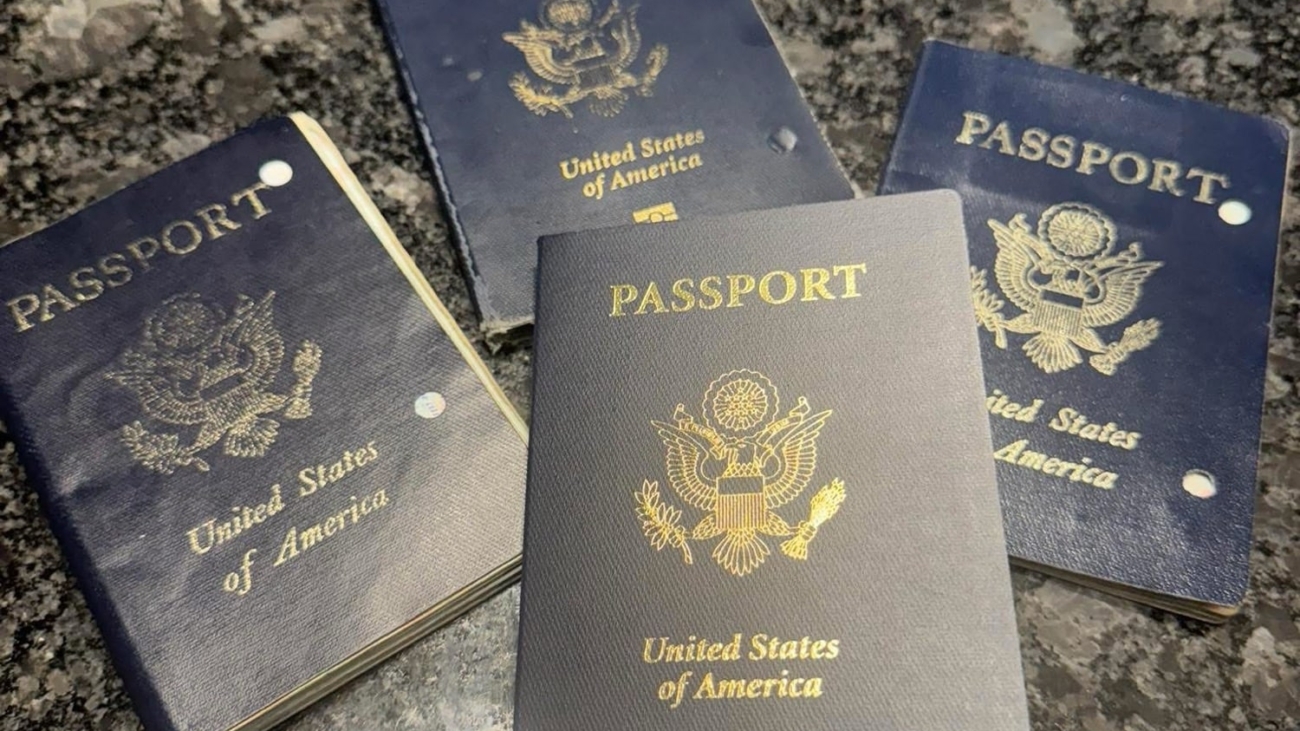
I Ran Out of Pages in my Passport

I got a brand-new toy to play with today 👍😁. Old “Betsy” finally ran out of pages and gave up on me 😆.

When I was younger, I spent far too much time in the rat race chasing dopamine—bigger houses, nicer cars, fancy clothes, promotions, and all the things society tells us we’re supposed to want.

The truth? Most of that stuff isn’t worth the stress. It’s expensive to maintain, creates unnecessary headaches, and none of it comes with you when your time here is done.

Find a healthy work-life balance ❤️. Take that vacation. Spend time with family and friends. Remember, no matter how important you think you are at work, they’ll replace you long before your loved ones do.

I’ve also learned that the more stuff you accumulate, the more time you spend managing it. Time and freedom are perhaps the most valuable things we can ever own. There is something incredibly satisfying about waking up with no obligations, nowhere you have to be, and the freedom to do absolutely nothing all day. #BumLife 😆

The memories stored in these old passports—“Fiona,” “Goldie,” and “Betsy”—are forever etched in my heart. Together, they’ve carried me across continents, cultures, and countless adventures. Thank you, ladies ❤️.

Now it’s time to welcome “Bertha” to the family. ✈️🌎

Here’s to new stamps, new stories, and new adventure

Screenshot

Is Jesus really Caucasian (White)?

Perspective:

I am at a stage in life where I question everything that does not make logical sense to me.

Growing up in a Christian home, images of Jesus were everywhere. In paintings, movies, churches, Sunday school materials, and even the free Christmas calendars that arrived each year, Jesus was almost always portrayed as a light-haired, blue-eyed white male.

My views are personal and informed through a combination of logic, history, scholarship, and science.

When I examine the historical and geographical context, it is difficult for me to reconcile that traditional Western depiction with reality. If Jesus was born in Bethlehem and descended from Abraham, Isaac, Jacob, and David, then he was a man of Middle Eastern ancestry who lived in the Levant nearly 2,000 years ago. From a historical and anthropological perspective, he would have likely shared the physical characteristics common to the people of that region during that period.

For many people, this creates a social and cognitive disconnect because generations have been exposed to a particular image of Jesus that became deeply embedded in culture, art, and religious tradition. When an alternative depiction is presented—one that reflects a more historically plausible Middle Eastern appearance, including darker skin tones—it can challenge long-held assumptions and biases.

For me, this is not about politics or race. It is about seeking historical accuracy and being willing to question narratives that may have been shaped more by culture and tradition than by evidence.

img_0200-1

Travel Tip: Getting from Milan City Center to Malpensa Airport with Ease

If you’re traveling through Milan and need a reliable way to reach Malpensa Airport, the Malpensa Express is one of the easiest and most efficient options.

The Regional Express

Why It’s a Great Choice:

  • Direct route from Milano Porta Garibaldi Station to Malpensa Airport Terminal 1 and Terminal 2
  • Fast travel time: Approximately 40–50 minutes
  • Frequent departures: Trains typically run every 30 minutes
  • Affordable: Around €15 one-way
  • Convenient schedule: Service generally operates from 5:25 AM to 10:30 PM

What to Know:

Two levels
  • Departure station: Milano Porta Garibaldi (usually suburban tracks)
  • Arrival: Direct to both airport terminals
  • Ideal for avoiding expensive taxis, unpredictable traffic, or airport shuttle delays

Live Like Friday Pro Tip:

Clean and spacious

Always check live schedules and purchase tickets in advance through the official Malpensa Express website or apps like Trainline or Trenord for the most up-to-date pricing and departure times.

Plenty of storage for your luggage

Final Thought:

For travelers looking to maximize time, minimize stress, and keep transportation simple, the Malpensa Express is a smart, budget-friendly way to move between Milan and one of Italy’s busiest international airports.

Travel smarter. Stress less. Live Like Friday.

img_8206-1

Canceling My Gym Membership

Today marked the end of a quiet, decade-long commitment.

After more than ten years, I officially gave up my membership with Dynamic Fitness. It wasn’t just any membership—it was a lifetime rate of $20 per month, something almost unheard of today. Truth be told, I haven’t used the gym much in recent years because I was always traveling. But I kept it—not out of necessity, but out of principle. It was my small way of supporting a local business that had once provided value, community, and consistency in my life.

But times change—and so must businesses.

Across the board, we’re witnessing a fundamental shift in how companies operate. Rising operational costs, global economic pressures, supply chain disruptions, inflation, and labor challenges are forcing businesses—large and small—to reevaluate their models just to stay afloat.

Take Southwest Airlines, long known for its customer-friendly policies like free checked bags. Even they have faced mounting pressure to adjust pricing structures and ancillary fees to remain competitive in an increasingly volatile market. Similarly, companies like Netflix have steadily increased subscription prices, while Amazon has raised Prime membership fees. Even everyday names like McDonald’s and Starbucks have had to incrementally increase prices, reflecting higher costs in labor, logistics, and raw materials.

This isn’t about greed—it’s about survival.

Small businesses feel this pressure even more acutely. Unlike large corporations with deep reserves, they operate on thinner margins and must make difficult decisions to remain viable. What once worked a decade ago simply doesn’t sustain in today’s economic environment.

So today wasn’t just about canceling a gym membership—it was a reflection point.

A reminder that loyalty, value, and economics are constantly in motion.

A reminder that behind every price increase or policy change, there are real decisions being made to keep doors open, people employed, and services available.

And perhaps most importantly, a reminder that adaptation is not optional—it’s necessary.

Here’s to the businesses that evolve, endure, and continue to serve… even when the math no longer makes sense the way it once did.

img_7631

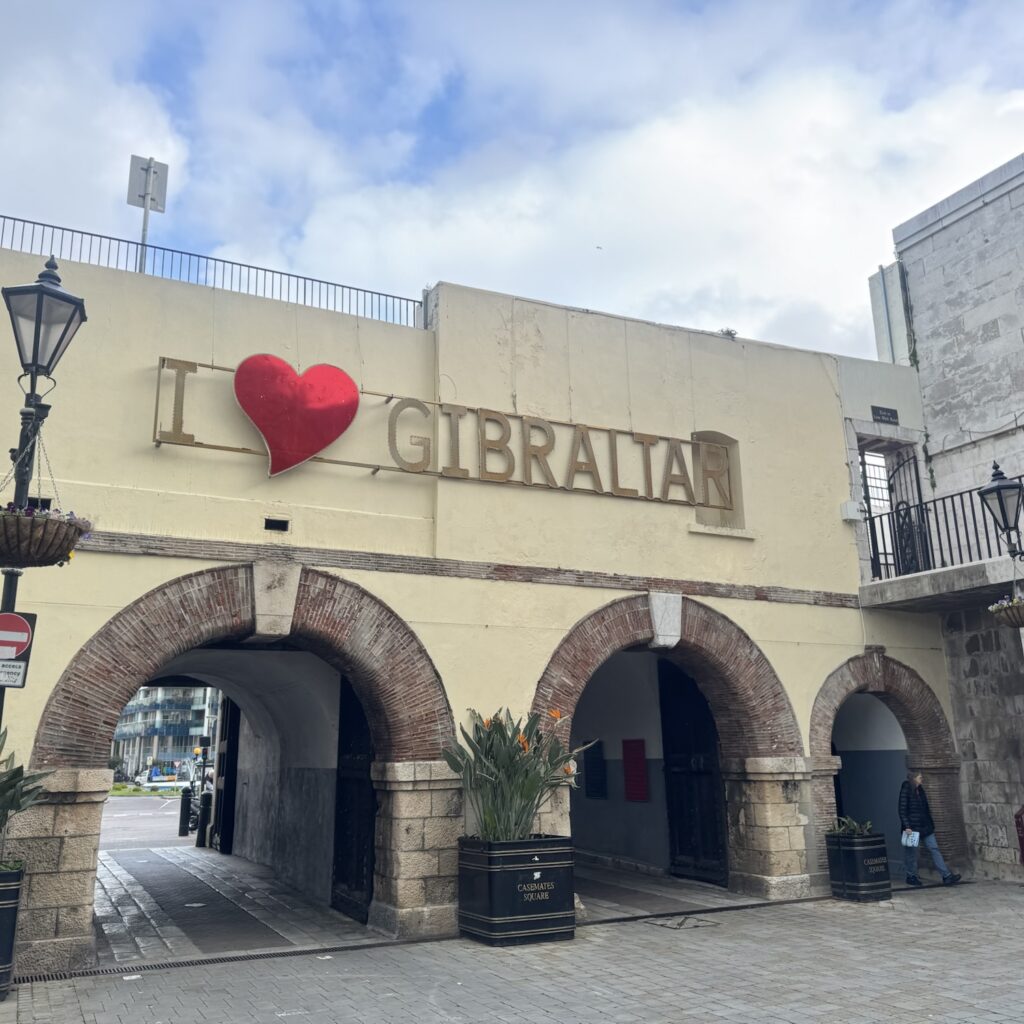
Gibraltar, My Final Stop in Europe

Today I’m in Gibraltar—my final stop in Europe before I set sail across the Atlantic back to the Americas. Standing at the edge of this small but powerful place, where two continents almost shake hands, I’m reminded how connected this world really is. Gibraltar may be tiny on the map, but its history, its energy, and its views are larger than life. I had an incredible time exploring every corner of it.

And here’s where it gets interesting…

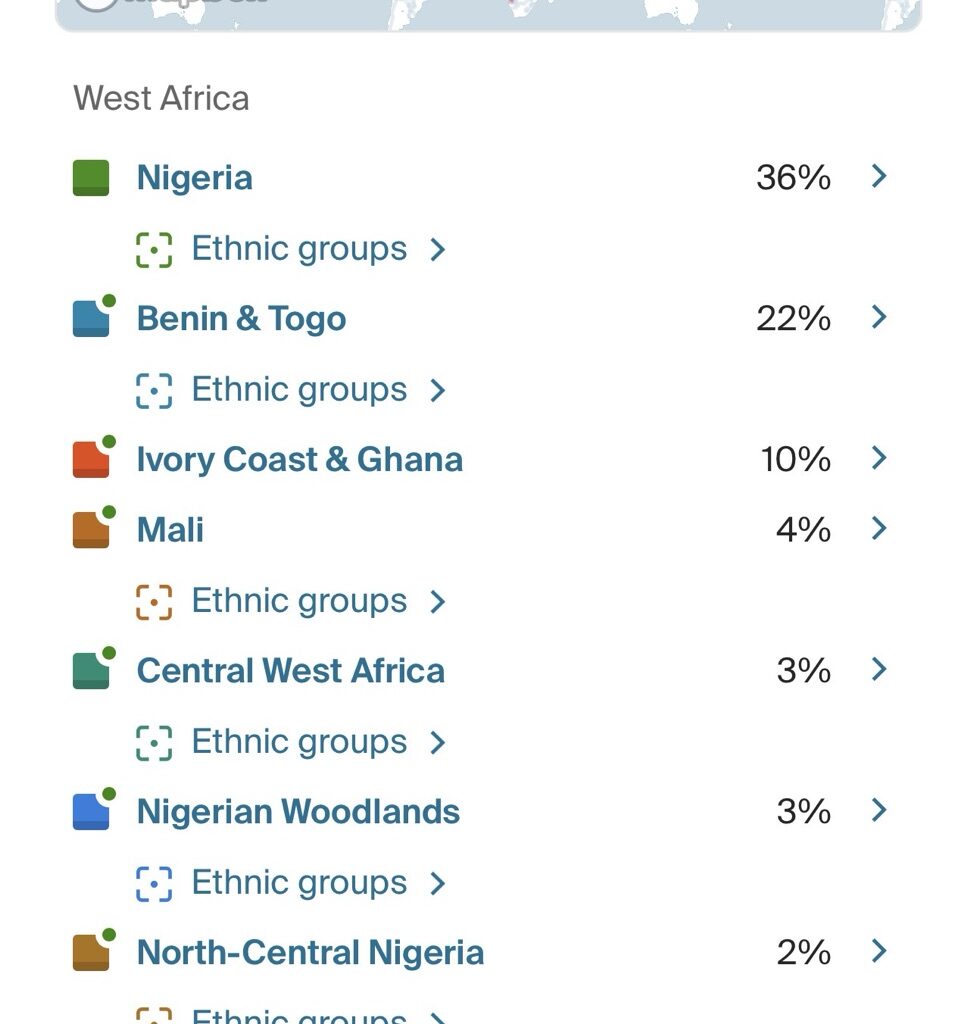
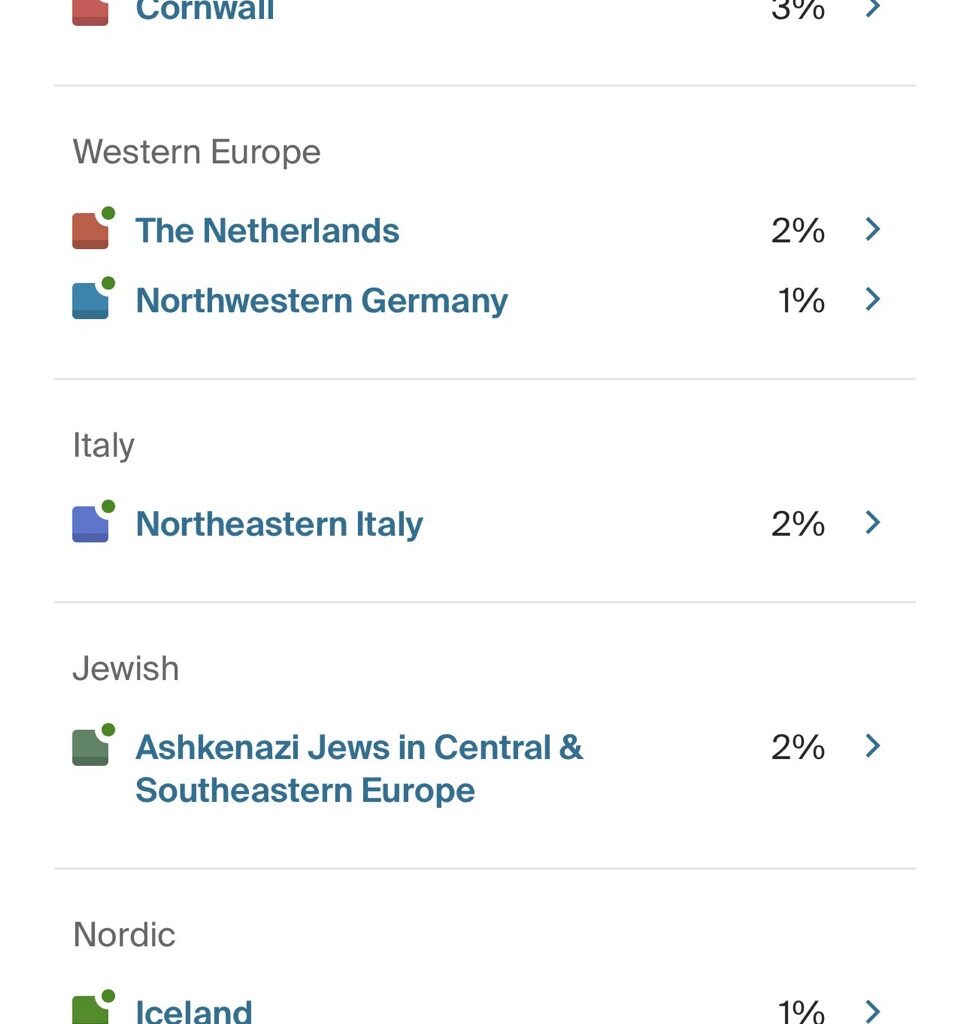
I got my DNA results back while standing at the gateway between Europe and Africa. Turns out I’m 36% Nigerian. I always knew my roots traced back to West Africa, but I thought Ghana had me on lock—Nigeria came in like, “Plot twist!” 😆

And then… 2% Jewish. So now I’m out here like, do I get invited to two cookouts AND a Hanukkah dinner? I’m just trying to figure out if I should bring jerk chicken, jollof rice, or latkes to the family reunion 🤣

But on a real note, moments like this make you reflect. Most people don’t realize that, if you trace it back far enough, we all come from Africa. Over time, through evolution, migration, and adaptation, we became the beautifully diverse world we see today—different cultures, colors, languages… but one shared origin.

Standing here in Gibraltar, looking out across the water toward Africa, it doesn’t feel distant—it feels like a full-circle moment.

Life is a journey, not a destination. And sometimes, that journey brings you right back to where it all began.

#LiveLikeFriday #Gibraltar #FullCircle #DNAJourney #WestAfrica #Nigeria #TravelLife #OneWorld

20170607_184354_001_original

Did Millennials Get a Raw Deal? The Most Tested Generation—and Why They’re Built to Win

Let’s talk about it honestly.

I’ve got a front-row seat—my son is 38, right in the heart of the Millennial generation—and I’ve watched this story unfold in real time. If there’s one conclusion I’ve come to, it’s this:

Millennials didn’t just face challenges… they faced a perfect storm. A Generation That Graduated Into Chaos.

Many Millennials graduated high school around 2007–2010. Sounds normal, right? Except it wasn’t.

They stepped straight into the 2008 global financial crisis, the worst economic downturn since the Great Depression. Unemployment in the U.S. peaked around 10%, but for young adults, it was significantly higher. Entry-level jobs disappeared. Hiring froze. Opportunities dried up.

And here’s the part people don’t always talk about: Many Millennials did exactly what they were told to do—

Go to college. Get a degree. Follow the “safe path.”

Instead, they graduated with record levels of student loan debt—often $30K, $50K, even $100K+—only to find themselves underemployed or unemployed.

That’s not just bad luck… that’s structural timing. The Bottleneck Nobody Saw Coming

During the recession, Baby Boomers delayed retirement.

Not because they wanted to—but because they had to. Their retirement accounts took a hit, home values dropped, and financial security became uncertain.

So what happened?

They stayed in the workforce longer. That created a ripple effect: Fewer promotions. Fewer openings. Slower career progression.

Gen X felt the squeeze… but Millennials, trying to enter the workforce, got hit the hardest.

It was like showing up to a game where all the seats were already taken.

Finally Gaining Momentum… Then COVID Hit

By the late 2010s, things were starting to stabilize. Careers were finally taking off. Debt was slowly being managed. Life was beginning to level out.

Then 2020 happened.

COVID-19 shut the world down.

Entire industries paused overnight—travel, hospitality, events, service sectors—many of which employ a large percentage of Millennials.

Once again:

Career paths disrupted Financial progress stalled Life plans delayed

Two once-in-a-generation crises… back-to-back.

The Hidden Cost: Delayed Life Milestones. Because of these disruptions, Millennials have:

Bought homes later Started families later Built wealth later. Not because of poor choices—but because of timing.

When you’re constantly recovering instead of advancing, progress looks different.

But Here’s the Truth Nobody Can Ignore…Pressure builds resilience.

And this is where Millennials flip the narrative.

This is one of the most adaptable, resourceful, and balanced generations we’ve ever seen.

Why?

Because they lived through both worlds: Before smartphones and social media And fully inside the digital revolution

They understand:

Face-to-face communication and digital fluency Traditional work structures and remote, flexible systems Stability and uncertainty

They didn’t just learn how to survive change—

They became experts at navigating it.

The Rise of the Resilient Generation

Millennials helped drive:

The gig economy Remote work culture Digital entrepreneurship Side hustles and multiple income streams

They questioned outdated systems and forced industries to evolve.

And now?

They’re stepping into leadership roles with a perspective shaped by experience—not entitlement.

Live Like Friday Perspective

Here’s how I see it:

Millennials may have gotten a raw deal, but they also got forged in fire.

And there’s something powerful about a generation that: Knows struggle Understands change And still finds a way forward. Because at the end of the day, life doesn’t guarantee smooth paths—it rewards resilience.

So no, this isn’t a sympathy post.

It’s recognition. Respect. And a reminder: Sometimes the most tested generation becomes the most prepared.

Final Thought

You can look at Millennials and say they got unlucky…Or you can look again and realize: They didn’t get a break—so they built strength instead.

And in today’s world?

That might be the ultimate advantage.

#LiveLikeFriday

img_2863

Is Cruising the best value when vacationing?

Despite the rising costs and all the little “nickel and dime” add-ons, I still stand by this—cruising is hands down the best overall value in travel.

Let’s keep it real… prices have gone up everywhere. Flights, hotels, restaurants, entertainment—nothing is cheap anymore. But cruising still bundles more into one experience than any other type of vacation.

Think about it:

You’re getting transportation, lodging, food, entertainment, and access to multiple destinations—all wrapped into one price point. Try booking a flight, hotel, meals, shows, and transportation separately in 3–5 different cities and tell me how that compares. It doesn’t.

On a cruise: Your “hotel” moves with you You unpack once but visit multiple countries Meals are included (and not just basic—full dining experiences) Entertainment rivals Vegas shows Pools, gyms, activities—all included And you wake up somewhere new without the stress of airports, taxis, or logistics

Even with the extras—WiFi, specialty dining, excursions—you still have control over your spend. You can go all-in or keep it budget-friendly. That flexibility is power.

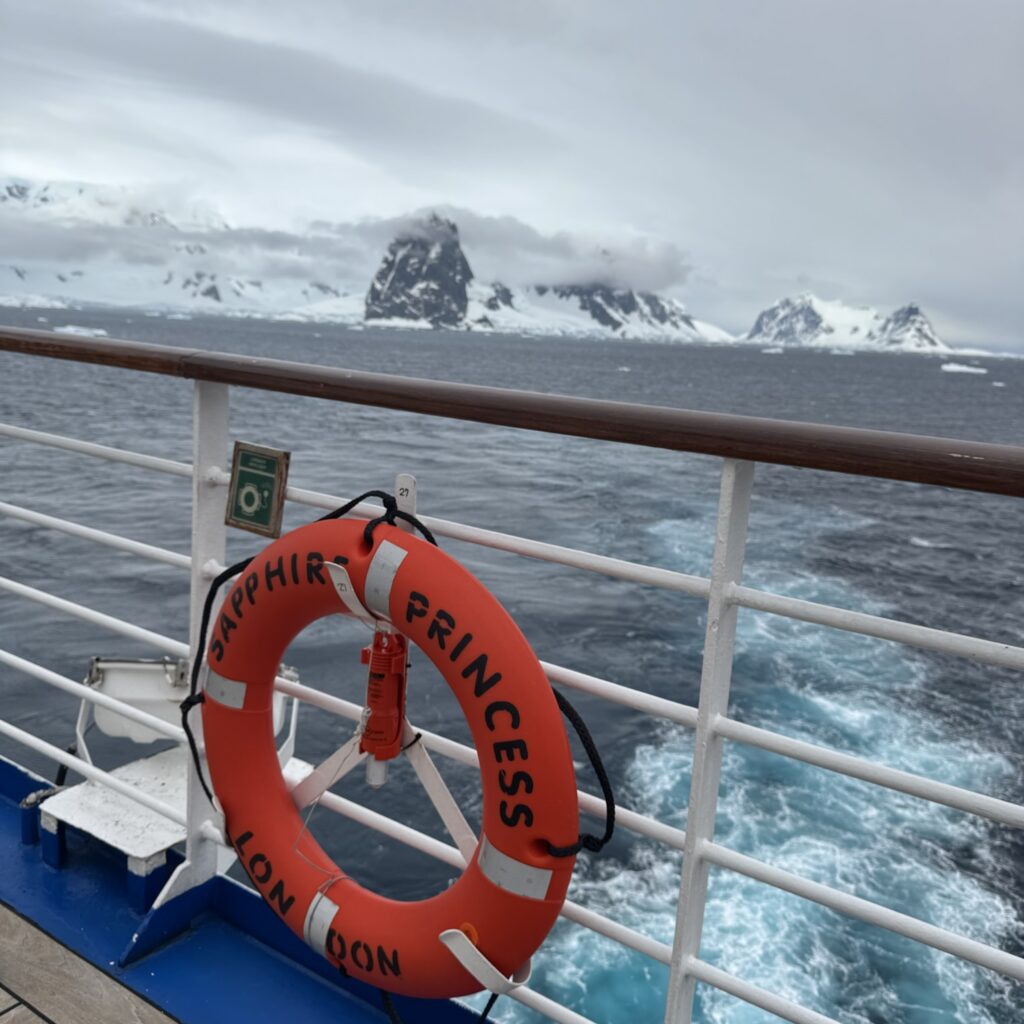
Sapphire Princess in Antarctica

And let’s not forget the intangible value: Time, convenience, and peace of mind. No planning chaos. No constant packing and unpacking. No worrying about “what’s next.” You get to actually relax and enjoy the journey—not just the destination.

For me, cruising isn’t just a vacation… it’s a lifestyle. It’s efficiency, adventure, and freedom all rolled into one.

Sapphire Princess in Antarctica

Bottom line: In a world where everything is getting more expensive, cruising still gives you the most bang for your buck—and the most memories per dollar.

#LiveLikeFriday

#CruiseLife

#ValueTravel

#MoreForLess